By combining biology and psychology with perspectives from philosophy, chemistry, physics, mathematics, and computer science, neuroscience majors explore how the brain shapes behavior, thought, emotion, and experience. Students investigate questions ranging from how we learn and make decisions to what contributes to disorders such as Alzheimer’s disease, insomnia, depression, and epilepsy.
At Rhodes, coursework is paired with hands-on research experiences that build analytical, technical, and problem-solving skills. Students learn alongside internationally recognized faculty and may pursue research on campus or through partnerships with institutions such as St. Jude Children’s Research Hospital, Le Bonheur Children’s Hospital, and the University of Tennessee Health Science Center. This interdisciplinary preparation opens pathways to medicine, research, biotechnology, healthcare, data science, and other fields focused on understanding the brain and improving lives.
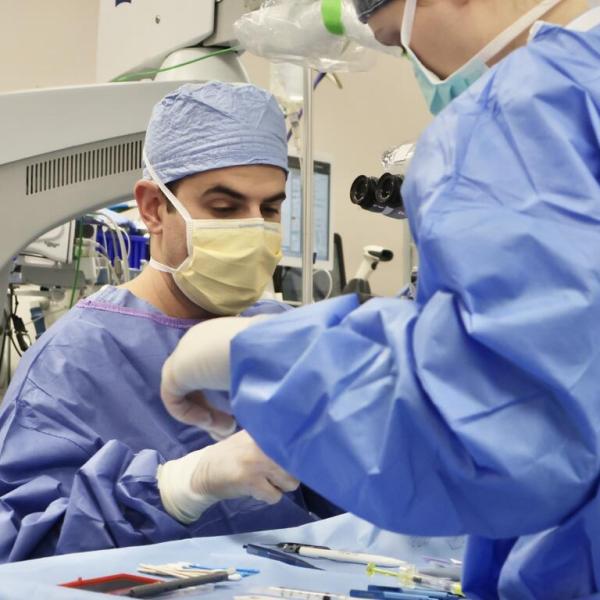
Dr. Salar Rafieetary, a vitreoretinal surgeon at the Charles Retina Institute and a member of the Rhodes College Class of 2012, recently performed a first-of-its-kind surgery in Tennessee to treat macular telangiectasia type 2 (MacTel), a rare disease leading to vision loss.

Academic Excellence
Our neuroscience major guides curious students to develop critical thinking, rigorous scientific inquiry, effective problem-solving, and the ability to conduct and communicate about high-quality research.

Career Readiness
Neuroscience students develop the knowledge, technical skills, and professional competencies needed to succeed in research, healthcare, biotechnology, clinical work, data science, and related fields.

Impact & Purpose
The field of neuroscience has a profound impact on society by advancing treatments for neurological and mental health disorders, driving innovations in medicine, and improving our understanding of the human brain and behavior.

Community & Support
The neuroscience major provides regular opportunities for professors and students to connect, build trust, strengthen relationships, and create an environment where students feel valued, supported, and motivated to succeed.
Careers, Opportunities & Student Success
- Qualified Rhodes students who meet specified benchmarks and apply through AMCAS are guaranteed an interview with the University of Tennessee Health Science Center College of Medicine.
- Conduct faculty-mentored research through course laboratories and independent projects on campus.
- Prepare for graduate or professional study and careers in medicine, scientific research, healthcare, biotechnology, clinical work, data science, education, law, and related fields.
- Develop skills in experimental design, data analysis, scientific communication, collaboration, and problem-solving that transfer across many careers.
- Pursue intensive research through the Rhodes/UTHSC Neuroscience Research Fellowship or the St. Jude Summer Plus Fellowship, which pair qualified Rhodes students with scientists at these prestigious institutions for an extended, paid laboratory research experience., data analysis, scientific communication, collaboration, and problem-solving that transfer across many careers.
Explore Neuroscience at Rhodes
Curious about how the brain shapes behavior, thought, and health? Tell us more about your interests and discover how a neuroscience education at Rhodes can prepare you for research, professional study, and a career with impact.
Research at Rhodes
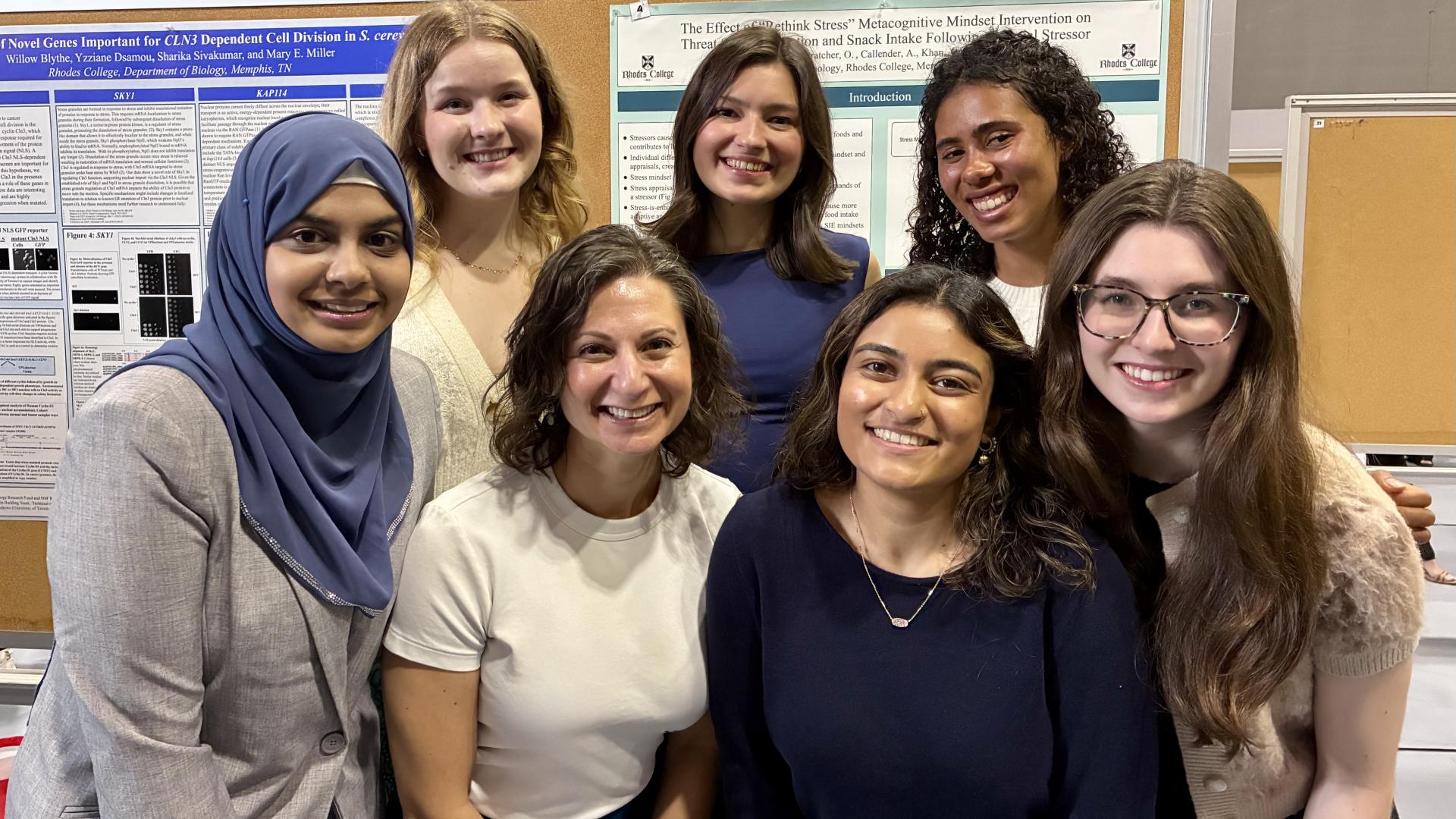
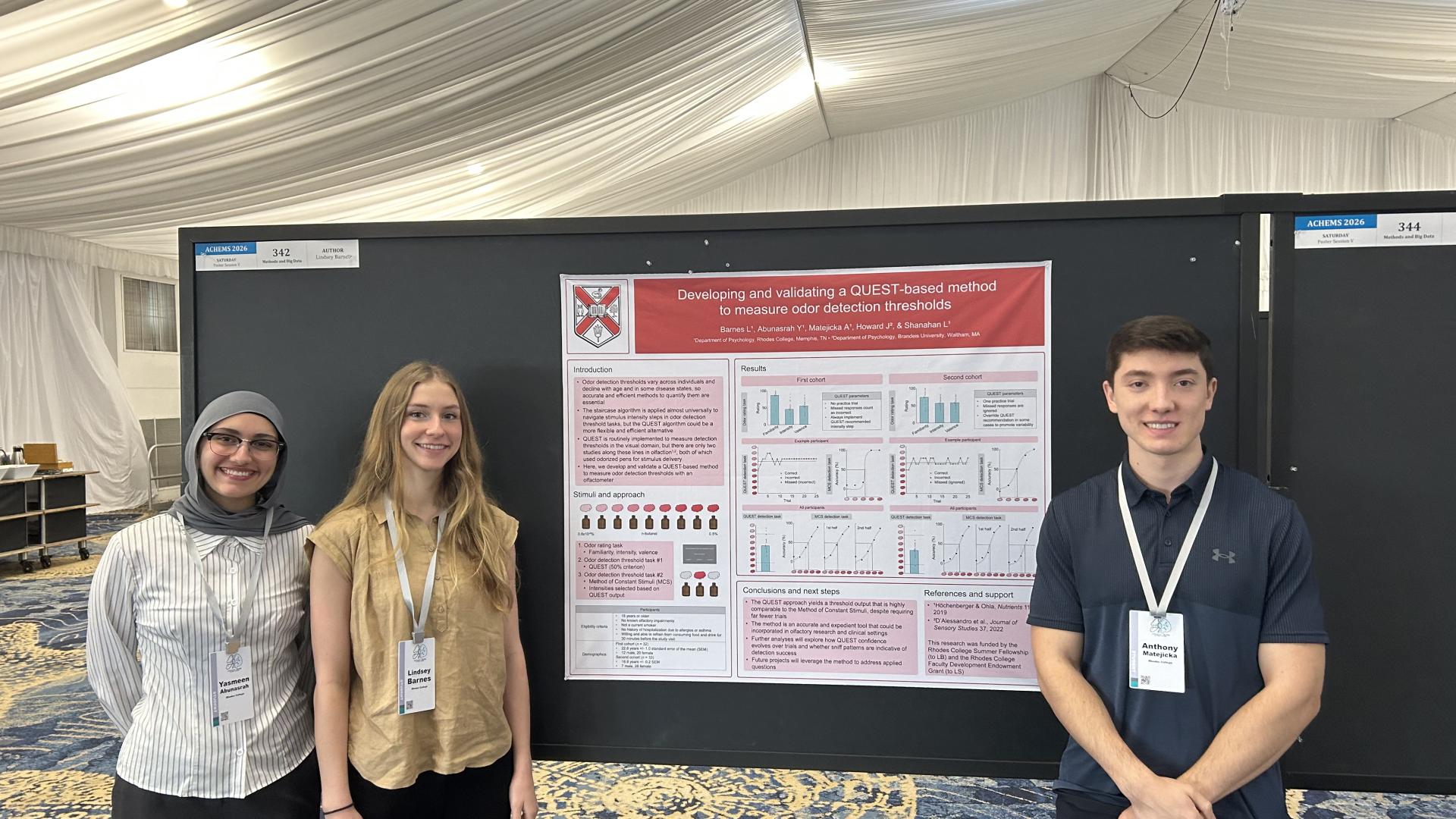
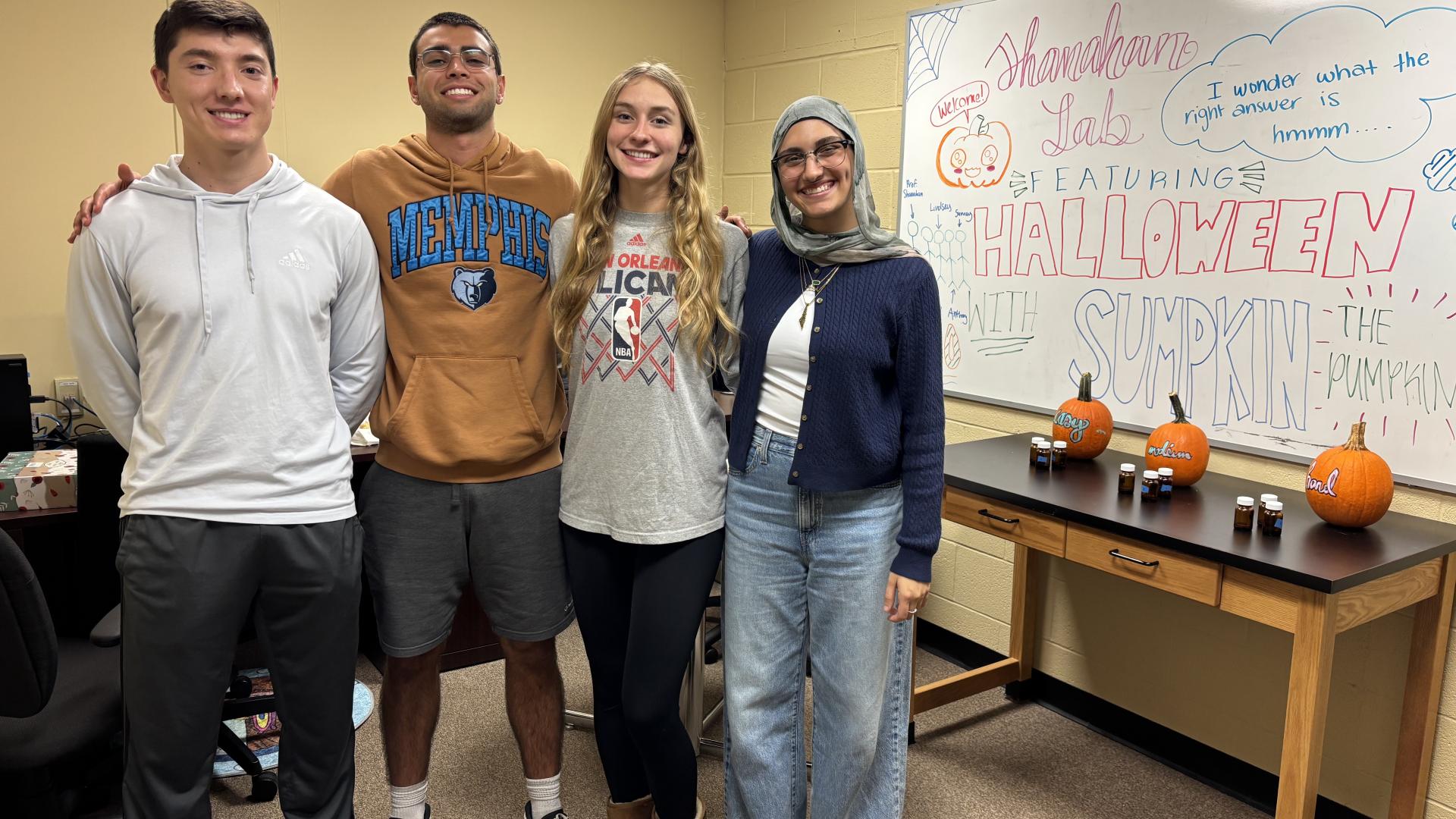
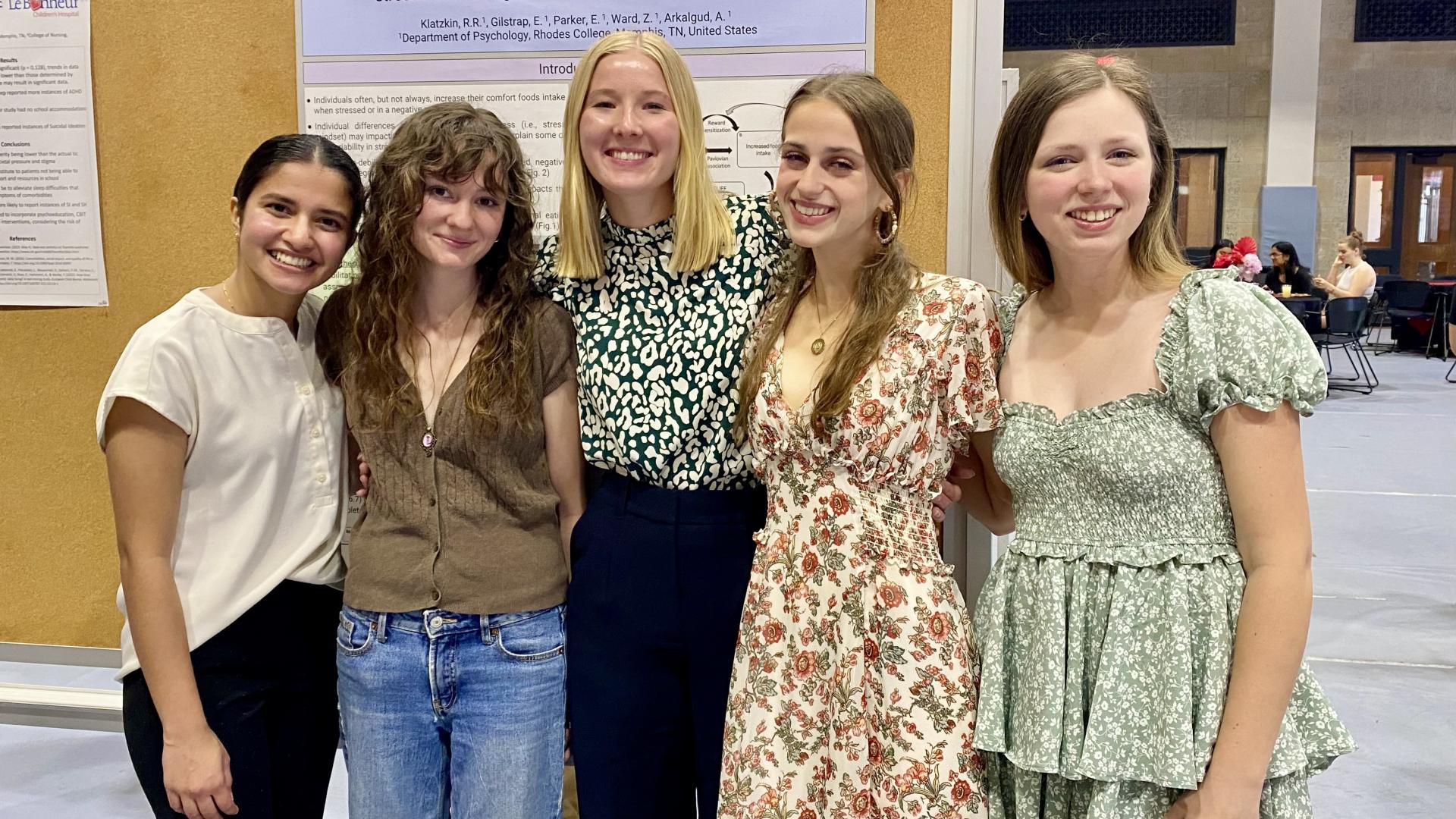
Neuroscience students learn in a community where research is part of the undergraduate experience. Faculty investigate questions across biological, psychological, and philosophical approaches to the brain and behavior, and many students contribute directly to this work as research collaborators and co-authors.
Recent faculty research, including work co-authored by Rhodes neuroscience majors:
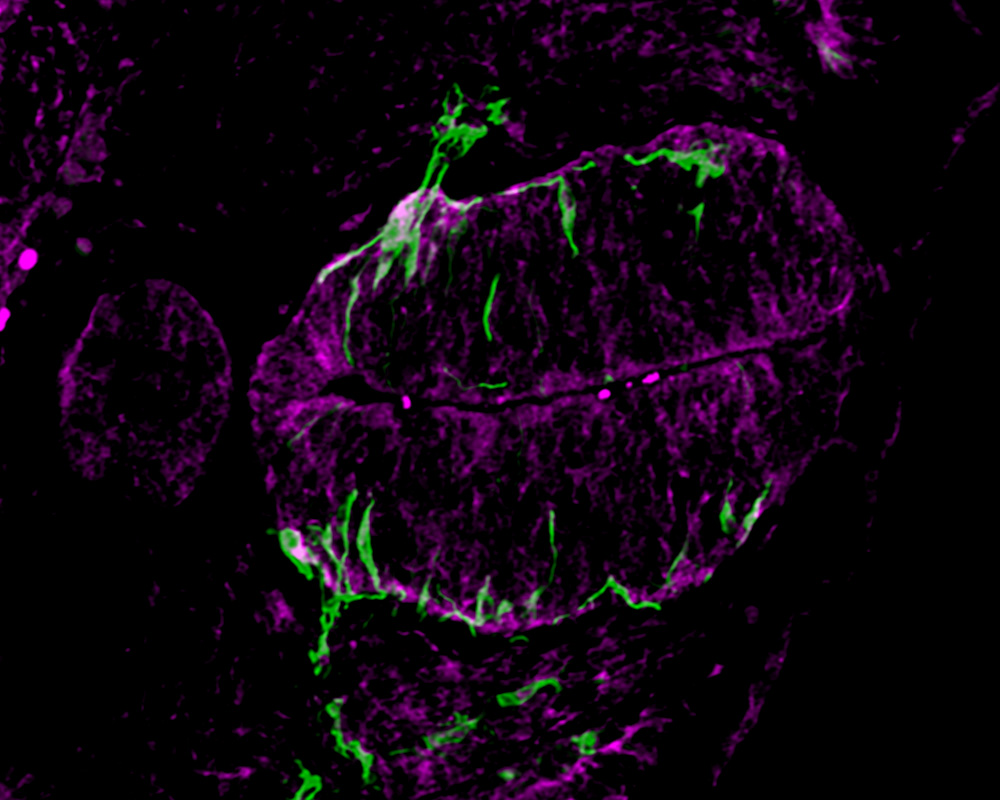
- Defining the spatiotemporal expression pattern of Rap1 in the chicken embryonic spinal cord
- Stress mindset moderates the association between threat stress appraisals and stress-eating in women
- Locus coeruleus norepinephrine neurons facilitate orbitofrontal cortex remapping and behavioral flexibility
- Reactivation during sleep segregates the neural representations of episodic memories
- Characterizing Olfactory Brain Responses in Young Infants
- Evoked Questions and Inquiring Attitudes
- Asking Questions in the Space of Reasons
- Lifetime stressor exposure is associated with greater rewarding effects of stress-related eating
Follow Neuroscience at Rhodes
See student experiences, research highlights, and program updates on Instagram: @rhodescollegeneuro
Neuroscience News

Six graduating seniors’ portraits are being added to Rhodes College’s Hall of Fame on the second floor of Southwestern Hall. The honorees are Jasmine Jeffries, Olivia Mack, Joshua Morris, Ariyana Muesse, Jude Shive, and KK Sowers.

Rhodes Student Government (RSG) represents the interests of students to the rest of the campus—faculty, staff, trustees, alumni, and friends of the college.

Maanasa Yepuru ’26, a Rhodes senior from Memphis, has taken an innovative step toward a future in neural engineering by combining computer science with neuroscience to craft her own unique interdisciplinary major.