
Today more than ever, organizations need people who can turn raw data into insights that solve problems and reveal trends. Data Analytics at Rhodes is an interdisciplinary program grounded in the liberal arts, built around working with real-world data. Students gain a strong foundation in computer science, mathematics, and statistics, then apply those skills in a concentration of their choice, ranging from business, finance, and marketing to political science, health equity, and urban studies. Students learn to gather, clean, visualize, and model data, and to consider the social, political, environmental, and ethical implications of how data is collected and analyzed. In addition to the major, students can pursue a minor in Data Analytics or one of two interdisciplinary majors: Data Analytics and Business, or Data Analytics and Economics.

Academic Excellence
Students build a rigorous foundation in computer science, mathematics, and statistics before moving into advanced methods such as machine learning, data mining, and time-series analysis.

Career Readiness
Every student completes a senior seminar centered on analyzing real data and presenting results, the same skills employers and graduate programs look for.

Impact & Purpose
Through internships with Memphis companies and nonprofits, students tackle the data-driven questions that matter most in their field, asking not just what the numbers say but who they affect and how they can drive positive change.

Community & Support
Students learn in small classes alongside faculty from computer science, mathematics and statistics, economics, business, philosophy, and their concentration department.
Why Data Analytics?
- Data analysts are in high demand across industries, as organizations rely on data to improve decisions, run more efficiently, and shape strategy.
- Choose from 13 concentrations: Accounting, Anthropology and Sociology, Economics, Empirical Musicology, Environmental Studies and Sciences, Finance, Health Equity, International Studies, Management, Marketing, Political Science, Psychology, and Urban Studies.
- Graduates are prepared for roles such as data analyst, data scientist, business intelligence analyst, financial analyst, and marketing analyst.
- Strong connections with local companies and nonprofits in logistics, health care, and finance help students land internships where they see firsthand how organizations collect and use data.
- In the senior seminar capstone course, students design and complete their own analysis of real-world data, connecting everything they’ve learned in the major.
- The program offers strong preparation for graduate study in data science, statistics, business analytics, economics, and public policy.
Pre-CTA Message
Ready to turn data into insight? Learn more about the major, minor, and interdisciplinary options.
Frequently Asked Questions
Do I need prior experience with programming or statistics?
No. Most students start with COMP 141 (Programming Fundamentals) and an introductory statistics course, neither of which assumes prior experience. Students with specific AP credit can sometimes skip these courses.
How is Data Analytics different from Computer Science or Mathematics?
Data Analytics draws on both, but its focus is applied: using programming and statistics to answer real questions in a specific field. Every major pairs that technical core with a concentration in an application area.
What’s the difference between the major, the minor, and the interdisciplinary majors
The major combines the data analytics core with a concentration in a separate, applied field, while the minor gives students in other majors a foundation in data skills. The two interdisciplinary majors (Data Analytics and Business, and Data Analytics and Economics) combine the full data analytics core with in-depth coursework in those fields: a single major that covers much of the content of a double major.
Data Analytics News

Rhodes Makes Top 50 Best Value Liberal Arts Colleges in the United States For International Students
Rhodes College is among the “50 Best Value Liberal Arts Colleges in the United States 2024 For International Students” published by Study Abroad Aide.
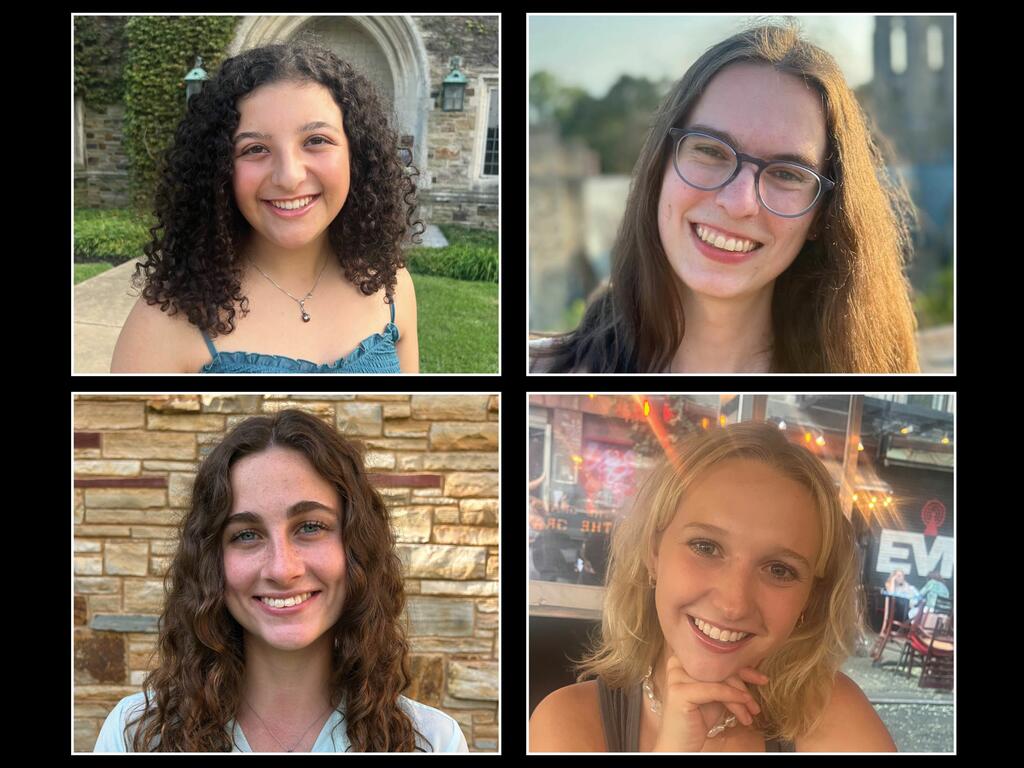
Rhodes College seniors Lucia Berkey, Riley Damiano, Piper Huddleston, and Gwen Williams have been selected to receive Fulbright U.S. Student Awards for the 2024-2025 academic year.

Four Rhodes students—Parth Sinojia, Samuel Lippe, Shayla Garrison, and Lauren Surratt—presented research at the 26th Annual Conference on Research in Undergraduate Mathematics Education (RUME) held recently in Omaha, NE.
Faculty & Staff
Associate Professor and Chair of Business; Director, Master of Science in Accounting Program